You don’t buy customer loyalty… You earn it

Even though sometimes they do things we don’t like, we are always loyal to our family and friends. This is what companies should aim for… to get loyal customers, that will not leave just because once something went wrong (Let’s not be utopian, even with the best products, processes or people, things will go wrong at some point).

The majority of companies will probably say that they have started looking at customer loyalty a long time ago. But allow me to strongly disagree. Loyalty cannot be bought. You cannot expect to have a loyal customer just because you were able to make him or her sign up for a loyalty card, and you offer £5 off the next buy after they spend £1,000.

Loyalty is a sentiment. It is an emotional attachment that cannot be bought with offers, discounts or promotions. It is more than that. It is an emotion that normally is consequence of a positive and pleasant feeling… i.e. satisfaction! And actually many studies and researches show exactly that. In business loyalty is directly proportional to Customer Satisfaction.

Loyalty = k x CSAT

Customer Satisfaction is collected through surveys, where companies ask customers whether the product or service has failed, met or exceeded expectations. When customers have high expectations and the reality falls short, they will be disappointed and less satisfied. On the other hand, if expectations are low, customers could be extremely satisfied with no more than ordinary service.

Customer satisfaction is therefore the difference between the customer’s expectation and what was actually delivered by the company.

CSAT = Delivery – Expectation

Companies normally use one of two ways to set customer’s expectations: by intent or by accuracy. John Lewis (well-known UK giant that tops every CX ranking in the retail industry) uses the first: “Never Knowingly Undersold”. Others prefer to use the latter: “Delivery in 48 hours”. Regardless of the tactic companies need to make sure expectations are exceeded or, at least, met.

A good delivery is dependent on a couple of factors. First and foremost, designing a good model. Companies cannot expect every employee to perform heroically, all day, every day, and forever. They cannot expect everyone to be outstanding, available and willing to make a huge effort and always go the extra mile. Companies need to design a model that allows everyone to deliver good service.

That design can have two main dimensions: A blueprint of the company (its organisation structure, processes and procedures, information/data model, main KPI’s, technology), and a mapping of the customer journey (his steps, attitudes, emotions, needs, goals). A good model will leave employees no choice but to deliver a good service as an everyday routine.

The other factor is the culture. And that culture must be aligned with the model. Culture will not tell employees what to do. It will rather tell them how to think.

Delivery Excellence = Good Design + Great Culture

Setting up the company with a model and a culture that enables an outstanding delivery, will definitely make customer expectations be met or even exceeded. This guarantees a positive and high customer satisfaction that in turn will make customers loyal to the company. Loyalty ensures that customer’s lifecycle is the desired CX infinite loop.
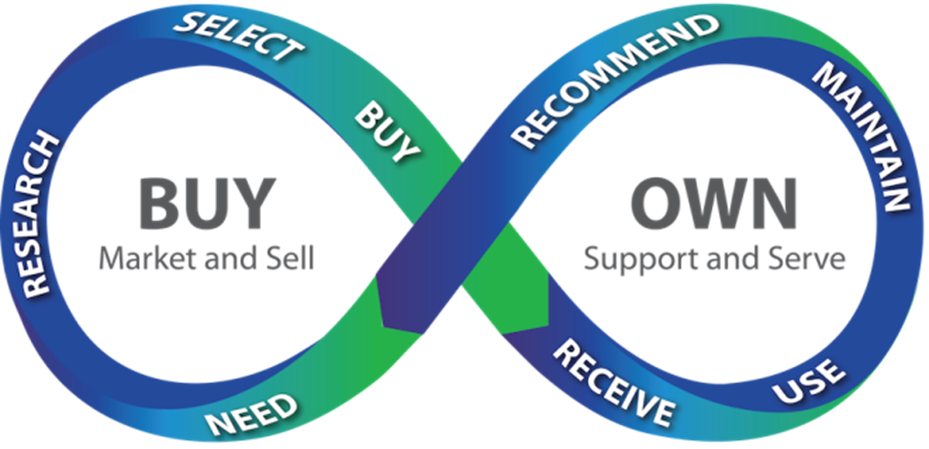
20140725 CX Infinite Loop

Don’t censor your critics, thank them!

One of the key steps to deliver a better Customer Experience is to listen to what the customers have to say and, on top of that, be responsive.

Today, social media is the main location for complaints or praises. And it has been, without any question, the most potent amplifier of customer voicing in recent years. Customers go to Twitter, Facebook, Blogs or review sites to share experiences.

Things that before would require loads of power, people, money, media lobbying, and huge marketing campaigns, are now created, organised, amplified and spread much more efficiently and quickly by the use of a #hashtag.

And it does not matter how insignificant is the customer and how big is the company. Everyone, including the media, loves a good David vs Goliath story. By default, everyone is sympathetic with the weak customer and distrusts the powerful company.

Companies cannot afford to ignore this explosion and this change. And today’s hyper-competitive and hyper-connected world demands presence, monitoring, accountability and responsiveness.

Customer’s feedback, either positive or negative, is invaluable, as it offers companies a veracious and real sense of how they are performing. And it is also one of the main ingredients of the perception that others (potential customers) have of the company in question.

But more importantly, customer’s feedback offer companies the possibility to turn around a bad experience, or to thank and amplify a praise for a good experience.

If companies do not listen to an unsatisfied customer, they are not only losing the opportunity of making it right (and most likely lose the customer forever), they are also letting the customer damage the company’s image and influence other’s perceptions.

And remember that the new world of media has shown us that truth is many times less important than people’s perception of the truth. A person or group can create a crisis over a false issue or an issue that no one has never thought about.

On the other hand, if companies do not listen to a loyal customer, they are losing the opportunity of capitalising on a good story, making the customer feel valuable, integrated in the process and part of the company, and possibly turning this customer into an advocate.

Voice-of-the-customer when captured, reviewed, analysed and evaluated, helps companies to identify trends, business opportunities, service needs, and sometimes even innovations for its products and services.

It is much faster to discover faults or bugs in a product from immediate customer feedback, than waiting for the poor quarterly sales results. Contrariwise, positive feedback gives potential customers a validation for their decision.

Take the example of two beloved companies, that score very high in Customer Experience rankings. Southwest Airlines and Dell. They don’t censor critics, they thank them.

Aggressive CC agents deliver Outrageous CX

Today I came across this outrageous example of customer service. Ryan Block, a journalist, recorded his call to the Comcast call centre, when he was trying to cancel his contract. The call turned into a “customer service odyssey“, with the call centre agent refusing to cancel the contract and even being rude at some stage. This reminded me of a very recent bad experience I had with Three (3), the mobile provider in UK.

Disclaimer: I left Three almost a year ago. Not because the service was bad, or because the customer service was not good enough, but because I needed a tariff to make/take calls when I’m abroad. And maybe because their target customer is different, they didn’t have competitive tariffs. I went to O2 – after the worse customer experience with Vodafone UK.

My girlfriend is still with Three. Last week she received a telemarketing call. The agent offered her a new phone and contract for £16/month. As it was cheaper than what she has (£21/month), she showed interest. But eventually found that the offer was not a replacement, but an addition. Straight away she said that she was not interested.

But the agent insisted, saying that it was a great offer. My girlfriend concurred but repeated she didn’t need it. The agent insisted again, saying she should take the opportunity of a good promotion to get a new phone. My girlfriend said that she would actually like to have a new phone, but didn’t make any sense to have two contracts and two numbers.

So the agent insisted again, suggesting her to give the old contract and phone to a family member or friend, and keep the new ones for her. My girlfriend replied that she didn’t have any family member or friend that would accept or need that, as everyone already had a contract and phone. But he insisted and said he would send her a SMS with the T&Cs.

At this point I already had enough of the conversation so I asked my girlfriend to let me speak with the agent. I picked up the phone and kindly asked him two things: a) if he didn’t understand that she didn’t need or want to take the offer; b) Why was he insisting with a person who told him 10 times “No, thank you“. He started pretending that the signal was bad and he could not hear me.

So, I asked him his name, employee ID and also the ID of the call. The answer was “Ok sir, if you don’t want the offer that is fine. Have a nice day“. To what I replied “I hope you don’t hang up the call before giving me what I asked“. Again the answer was that he could not understand. So I repeated slowly “Please give me your name, employee ID and ID of the call, if you can“. He hung up the call in my face.

Obviously I called Three customer service straight away, and asked to make a complaint against these aggressive and abusive telemarketing calls, and this agent in particular. The customer service agent listened, concurred the behaviour was not acceptable, apologised, logged the complaint, and promised his supervisor would call me in the next 48 hours to give me feedback/update on the situation. 48 hours passed, nothing so far.

So mapping once more the experience to the CX pillars (from Nunwood)…

Three didn’t behave uprightly (Integrity). And then despite making an effort to empathise (Empathy) they failed with their promise (Expectation) and didn’t solve my issue (Resolution), forcing me now to call back asking for an update (Effort).

Poor vs Great Customer Experience

5 weeks ago I went to the City of London Dry Cleaning Co. in Canary Wharf, as I had a suit and a jacket to dry clean. It was my girlfriend’s jacket. A very nice Massimo Dutti padded jacket with knit side panels and contrasting leather details. The gentleman looked twice to the label in the jacket and said “that is fine, you can leave it with us“.

A few days later I went to pick it up and noticed that the jacket was ruined. The leader smudged to the fabric, in the pockets and collar. I showed it to the lady who immediately looked into the label and, after confirming it was ok, said “leave it with me, I will find out what happened and sort it out“. A week later she called me saying that they were still looking into it. Ok, I said, no rush.

3 weeks later I happened to be passing by, so I went in, and asked for the jacket. It was there, with a letter from the company attached, saying that the jacket was cleaned as instructed on label and therefore it was not their responsibility. I had a bit of an argument with the lady. Told her that I thought they were not being reasonable and asking her to put herself on my shoes.

The truth was she didn’t care. Nor her company, for that matter. They blamed it on Massimo Dutti. At some point she was even rude (speaking over me) and ended up turning her back on me when I said that I was a powerless and helpless customer with a ruined jacket, that was just asking them to sort out a problem that they themselves created.

So I went to Massimo Dutti in Canary Wharf, asked for the store manager and explained the situation. He could have said he was not able to help me: a) I bought the jacket in Regent Street’s store 9 months ago; b) I didn’t have the purchase receipt; c) It was obvious that it was the dry cleaning fault. Instead, with a smile in his face, he said “I will certainly help you sir“.

He read the letter (from the dry cleaner) and checked the label. I asked if he thought it was not their fault. He said: “That doesn’t matter sir. If they don’t take responsibility, I will not let a customer of ours in that situation, with a ruined jacket. I will give you a refund or you can choose another product for the same value. I just need to see a proof of purchase“.

So, after I showed him a bank statement (he didn’t demand any print outs or anything) he said we could choose another product or refund. My girlfriend chose a new (very similar) jacket, that cost exactly the same, and even bought another blouse to match the jacket (which she paid separately).

Needless to say that my girlfriend and I will not return to the City of London Dry Cleaning Co. (who just lost two customers) and were delighted with Massimo Dutti (who just earned two loyal customers and advocates).

Now, from a Customer Experience perspective, and picking up the Nunwood CX pillars, here is what City of London Dry Cleaning Co. did wrong and Massimo Dutti did right:

  • Personalisation: An individualised attention, and an effort to understand my motivations, needs and circumstances, created an emotional connection.
  • Integrity: By being trustworthy and taking responsibility, they generated trust. Individual staff actions made me like and trust the brand.
  • Expectation: CSAT = Delivery – Expectation. By exceeding my expectations the company provided a good CX and now have a satisfied customer.
  • Effort: Removing unnecessary obstacles and bureaucracy, making it quick and easy to sort out my issue, they were driving loyalty and advocacy.
  • Resolution: Apologising sincerely, acting fast and resolving my issue turned a poor experience into a great experience, recovering an unhappy and frustrated customer.
  • Empathy: Listening, understanding and putting themselves in my shoes, they created a rapport. Furthermore, they concurred, explained and went the extra mile.

Customer Journey Mapping workshop #2 and #3

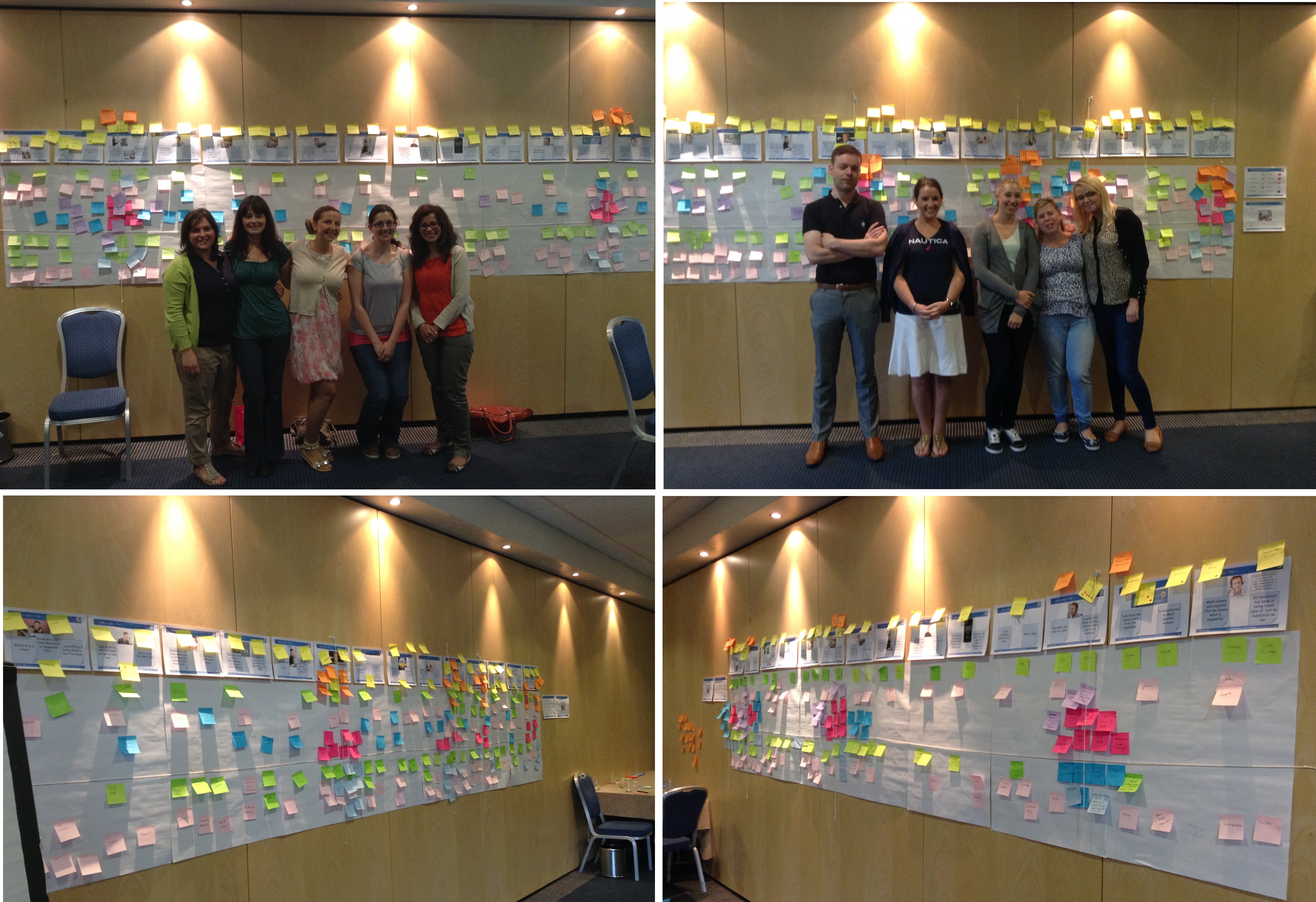
This week Brian O’Flynn (@oflynnbrian) and I delivered another two sessions of the CapricornVentis 1-to-1 Customer Journey Mapping workshop.

This company (our customer) has a fantastic team and they were outstanding attendees. Very dynamic and into the exercise, they were really committed to finding ways of improving the customer experience that the company is delivering.

On our side, the plan was the same. Same agenda, structure and pace. But obviously we improved some points – after some auto-criticism and feedback from previous sessions. The final result was great, with some tangible outcomes.

MVC_CJM_Workshop_2_3

Customer Journey Mapping workshop

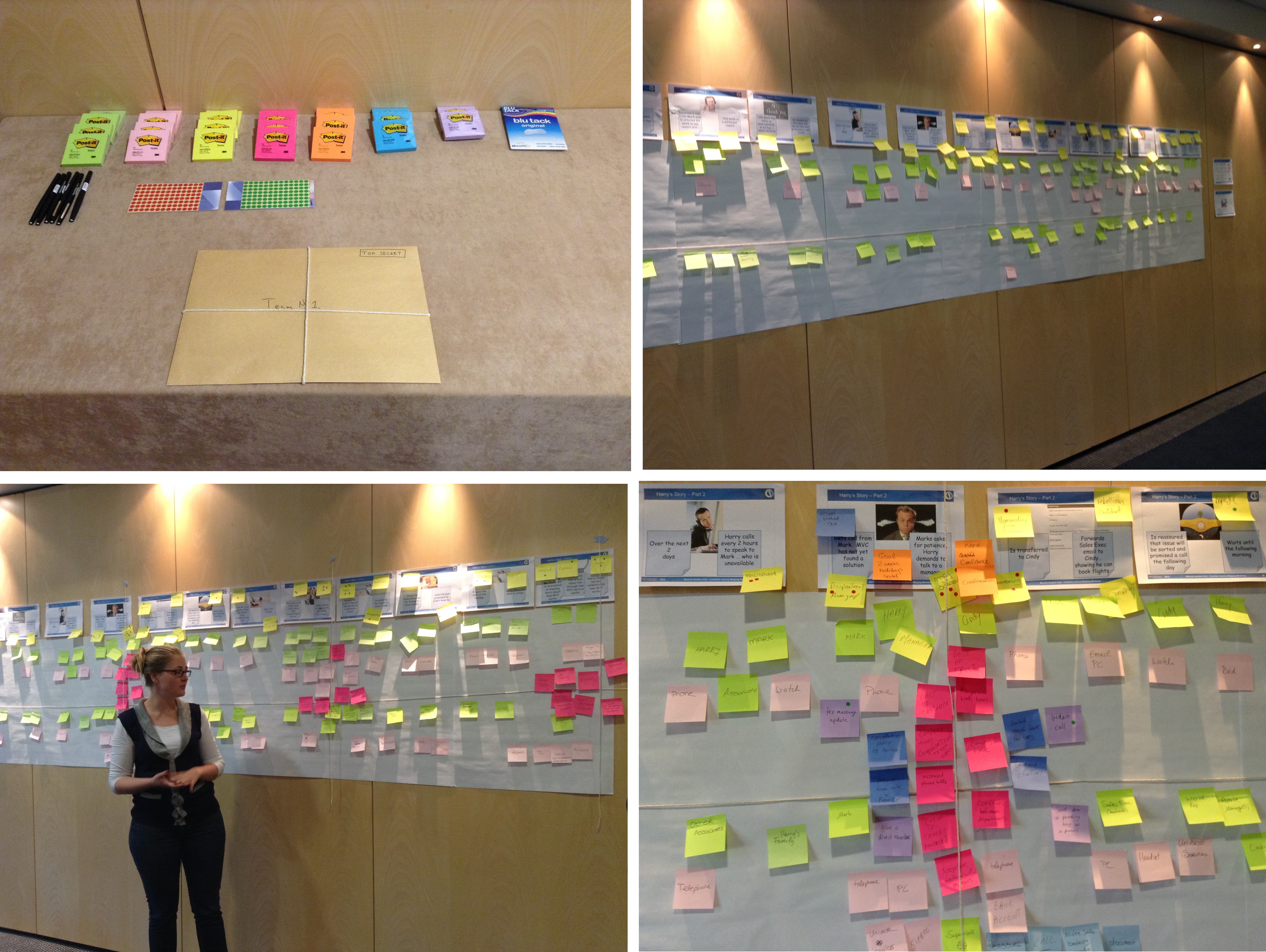
CapricornVentis is delivering three 1-to-1 Customer Journey Mapping workshops to a company that showed interest (and need) in improving the Customer Experience. I am teaming up with my colleague Brian O’Flynn (@oflynnbrian) to facilitate those workshops.

This company (our customer) has a very interesting business and its employees are really dynamic, committed and engaged. For the workshop we chose a persona and used a real customer journey (a problematic one), provided by the management team.

In order to achieve better results, we planned to use a mix of the best in the Stanford way of customer journey mapping, our previous experience as attendees/coaches in other journey mapping sessions, and more importantly our experience/knowledge as consultants.

We started by sharing some good and bad experiences. As always the audience had many negative ones (mainly with banks and telecom providers) and a couple of positive ones (mainly with travelling and leisure). Then, I did a quick presentation around “Customer Management to Customer Experience“.

With some very good insights on what is Customer Experience, why it is so important these days, and how to deliver/enable it, the audience was now ready to dive into the Customer Journey Mapping exercise. We explained how it works talking them through an example.

From that moment on it was all fun. Music, colours, loads of post its, great discussions, amazing ideas, outstanding innovations, excellent outcomes. The feedback was great and we look forward for the next two sessions.

blog

Oracle acquired co-browse provider to enhance CX

Oracle RightNow Co-Browse Cloud Service enables a customer to share his/her desktop (browser or any other application) while engaging in a live chat conversation with an agent, helping to facilitate the transition from self-service to assisted-service seamlessly by establishing a virtual connection between agents and customers.

Using the co-browse functionality agents can guide customers through pages/processes using the mouse to point or demonstrate actions. If needed, agents can also take control of the desktop/browser in order to help the customer complete actions (e.g. filling out a form, completing a sale, sort out technical issue).

Last Friday Oracle announced the acquisition of LiveLOOK a company that specializes in collaboration and screen-sharing technologies. Market leader in this area, providing co-browse solutions to 500 companies around the world – including 20% of Fortune 100 companies, that use it to improve online customer service and sales.

Oracle already had c. 100 customers using LiveLOOK since it was integrated into the Oracle RightNow CX Cloud Service (aka Oracle Service Cloud). The difference is that now LiveLOOK’s technology will be OEM and integrated directly into Oracle Cloud.

May 2014 Release is now available

The May 2014 release of Oracle RightNow CX (aka Service Cloud) is now available. As usual there are some great new features and functionalities. Here are the main ones…

Enhanced User Interface for the Dynamic Agent Desktop

The console has an enhanced User Interface, much more flexible and faster. It allows users to change the layout by undocking, moving, removing and re-ordering controls, tool windows and admin workspaces. These can now be dragged into another screen or even to the new navigation pane that had been added to the right of the content pane.

 DAD-1

A new concept of sub-tabs was introduced. When a user opens an associated record (e.g. open a Contact in a context of an Incident), that record’s workspace opens in a sub-tab, rather than in a new tab.

DAD-SubTab

In Analitycs, it is now also possible to customise the search window layouts of reports and dashboards.

DAD-Analytics

New Feedback Surveys for Mobile Devices

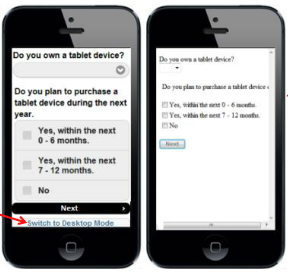
It is now possible to create surveys that will automatically optimised when accessed through mobile devices. RightNow is able to detect whether a survey is being taken on web or mobile device and adapt the landing and questionnaire pages. Nevertheless, there is an option to “Switch to desktop mode”

MobileSurveys2

To further optimise the surveys, Conditional or Case sections can be added in order to show different content for web and mobile devices (e.g. an image used in the survey may be smaller for mobile devices).

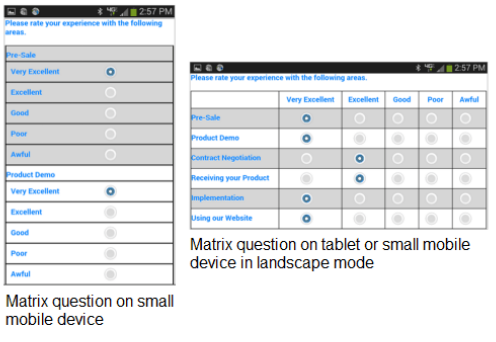
Matrix questions will be rearranged to display vertically on small mobile devices (less than 400 pixels).

MobileSurveys_Matrix

Mobile look & feel can be checked when building/designing the survey by using the new “Mobile Preview” feature.

MobileSurveys_Preview2

The following new reports where added to the list of standard reports in order to analyse Web/Mobile survey trends:

  • Mobile Survey Trend
  • Mobile Survey Browser Trend
  • Mobile Survey OS Trend
  • Standard vs Mobile Survey Trend

Object Event Handler in Rules, Surveys and Campaigns

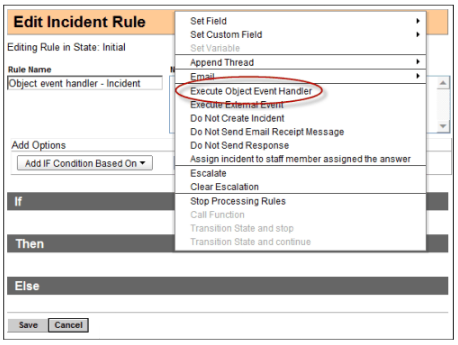
It is now possible to invoke Object Event Handlers from Business Rules using PHP that can be associated with CRUD operation in standard or custom objects.

ObjectEventHandler_BusRules

It is also possible to add Contact-related Object Event Handlers using PHP that can be associated with CRUD operations on Contact objects used in Surveys and Campaigns.

ObjectEventHandler_Surveys

Single logout for SSO

If using Single Sign On (SSO) to login to other apps and RightNow as the Identity Provider, agents can now be automatically logged out of all service providers they are logged in to, either applications are external or internal (e.g. OPA) to the Oracle Service Cloud.

Enhances Siebel Integration

The new version of the framework allows the use of the Customer Portal with version 8.1.1.11 of Siebel. This means that Siebel customers can use the RightNow Customer Portal alongside Siebel without having to implement the complete RightNow solution.

This way, questions submitted on the “Ask a Question” page of the RightNow Customer Portal will be directly converted in Siebel Service Requests, rather than creating a Incident in the RightNow database (that then had to be sent/created to Siebel).

Customer Portal
The new version of the framework includes “View Partials”. These are chunks of code that can be used/re-used in multiple places in a widget or shared across multiple widgets, in order to avoid code duplication.

New Objects available for ROQL queries

The new version of RightNow lets API clients access (using Query CSV() operation) the following objects for ROQL queries:

  • SystemInformation object to retrieve a list of API versions that are supported for a given site.
  • ReleaseInformation object to retrieve RightNow release information (e.g. release date, service pack level, build number, patch level) and other version details for a specific site.
  • PerformanceRecords object to retrieve information related to incident performance and import into data warehousing solutions for further analysis and reporting.
  • “Mailbox” – Mailbox object to prevent direct SQL queries and whitelisting

Chat Advanced Routing

It is now possible to route incoming chats to agents based on their specific language, product skills and workload.

Furthermore, it is possible to designate primary agent responsibilities, overflow coverage, and VIP queues without needing to make changes in real-time. Experience Routing provides prioritization and assignment control to meet business objectives.

New reports where added to the list of standard reports in order to track performance of advanced routing of chat sessions.

Enhanced SRM Integration

In the new release RightNow leverages SRM’s noise filtering and semantic analysis. Also the Social Monitor will now execute searches every 5 minutes (previously searches were done every 15 minutes).

CX WebCasts presented by Oracle and CapVentis

CapricornVentis and Oracle will deliver, in the next few weeks, a series of free webcasts around Customer Experience. To attend, go to CapricornVentis website and register.

These will be very short (c. 30 minutes) webcasts with different topics, addressing best practices for using modern technologies to increase customer retention & acquisition rates, and reduce costs of customer engagement.

Here is the calendar:

  • Get Social, Get your Customers

Thursday, May 29th @ 15h00. Delivered by Louise Holmes

  • Empower your agents, Know your customers, Measure your performance

Thursday, June 5th @ 15h00. Delivered by Luke Brennan

  • Serve Me, Here, Now

Wednesday, June 11th @ 15h00. Delivered by David Lopes

  • Online chat – How can this help your business?

Thursday, June 19th @ 15h00. Delivered by Luis Melo

Multi-Channel vs Omni-Channel

Ian Golding is one of the most respected Customer Experience specialists out there. Recently in his blog he wrote a fantastic post – “John Lewis’s greatest challenge – the omni channel customer experience” – where he touches one of my dearest topics.

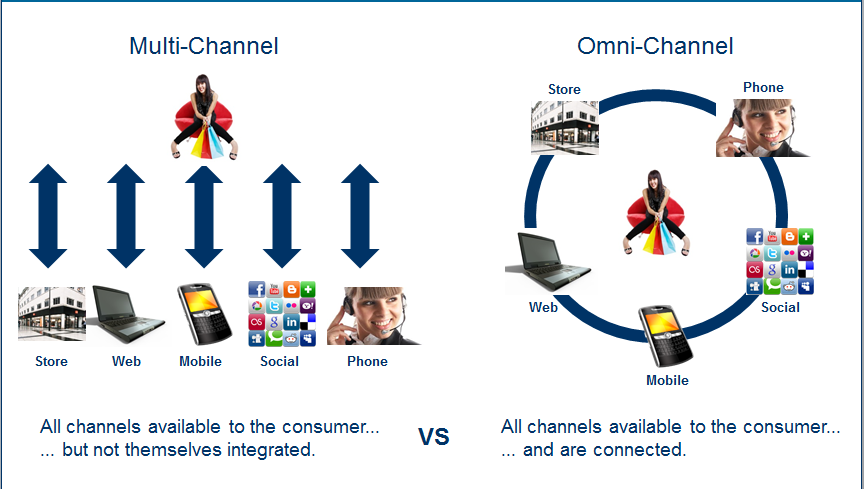
I have been trying to evangelise my readers, clients and peers about this for some time: Multi-Channel is different from Omni-Channel. And that discrepancy can ultimately have an enormous impact on the customer experience.

We are in the digital age and the majority of organisations offer their customers a variety of channels to interact, providing a Multi-Channel service. But the truth is – and this is what my personal experience tells me – all channels are detached.

This is the slide that I usually include in my presentations:

mcvsoc

Should technology help? Yes, definitely. Is technology helping? No, not really. Due to the fact that organisations use silo applications for different channels, departments, or lines of business. Normally those silo applications don’t speak with one another.

If organisations want to make those silo applications talk to one another they have to build some complex, expensive, time-consuming and clunky integrations. Usually it ends up not working that well and being far away from perfection.

The best solution is to adopt an Omni-Channel platform where all channels are connected, and everything is truly and natively joined-up. Where customers can use their preferred and most convenient channel, and agents have a sole way of deal with interactions, regardless of the channel.

Oracle RightNow CX Cloud Service (aka Oracle Service Cloud) is certainly the best, and probably the only Omni-Channel platform in the market.