G2 Crowd Grid® for Feedback Management

G2 Crowd claim to provide “real-time and unbiased user reviews” that will help companies “objectively assess” the best technology solution for one’s business. Rather than spending “too much time sifting through spin, reading outdated analyst reports, and sitting through endless meetings“. G2 Crowd offers “unfiltered reviews from peers who use similar solutions” and “relevant references and expertise” offered by users rather than the vendor itself. This sounds pretty powerful!

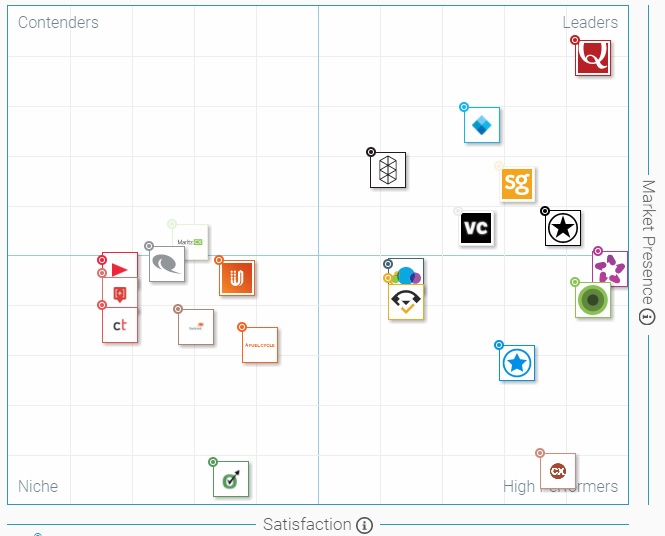
I’ve been talking about the importance of feedback and how crucial it is to hear the Voice-of-Customer and Voice-of-Employee (as well as Voice-of-Process, in some instances), and G2 Crowd recently published their G2 Crowd Grid® for Enterprise Feedback Management – which shows the best Enterprise Feedback Management software solutions following customer satisfaction and scale.

EnterpriseFeedbackManagement

Qualtrics – which I have mentioned a few times before – is leading the pack. And up there from almost every perspective: Best ROI, smoothest implementation, most usable or easiest to do business with. It is indeed a fantastic platform and technology, that I would recommend you look at if you are embarking in feedback or experience management projects.

1 night in hotel, 4 simple CX lessons

Last week I travelled to Dublin, in Ireland, and stayed in a so-called 4 star hotel, the Talbot Hotel Stillorgan.

Arrived and went to reception. Only one customer was waiting, whilst the person behind the counter tried to answer the phone (which didn’t stop ringing), deal with couriers dropping parcels, and assist customers. 15 mins had gone by when my turn came up “I didn’t do anything for a couple of hours, and now everything seems be coming at the same time”, the guy said. First, a greeting would be nice, and second it’s not really my fault that Armageddon arrived at 7:00 PM on a Thursday.

Went up, unpacked and came down for dinner at the bar. There was no customer waiting, only a few sitting at tables already served. Two waitresses ran around, in and out of the kitchen. What appeared to be a manager was checking receipts behind the counter. No one bothered to even acknowledge my presence. 5 mins later, the manager asked “can I help you sir?”. Well, first a greeting would be nice, second I’m standing here not because I need help but because when I have nothing to do, I sit in bars staring at people.

In the morning, no hot water was running in the shower. Eventually I called reception to explain the situation. “It’s cold outside sir, so it might take a while”. I left it running for 10 mins whilst I shaved, and eventually decided to take a cold shower, as I had a plane to catch and a long journey to the airport. Again, first a greeting would be nice, and second Ireland with 7 degrees centigrade, is not really the north pole, is it?

Came down to check-out and, at reception, the same person who had answered the phone 30 mins earlier didn’t even bother asking if eventually the hot water had come. “Check-out sir?”. I have a feeling that I’m repeating myself… first a greeting would be nice, second I’m standing in reception, with my luggage, at 6:30 AM. Would it be because I want to ask where the gym is, or because I want to check-out? Leave it for you to guess.

Asked about the bus to the airport, and was told I should leave the hotel, turn right and it was a short walk to the bus stop. After 10 mins walking on the dark, cold and rain I could not find it and, to avoid losing my flight, decided to call a Uber – which cost me 3,5 times more than the bus. Turns out that the bus stop wasn’t to the right, rather I should have turned left coming out of the hotel. Reception gave me the wrong direction.

This hotel clearly has very little regard for its customers and their experience. I won’t bother returning, but I did take the time to leave a review on TripAdvisor, and a bit of advice in here….

1. Smile and greet. Little things and small gestures matter more than one may think. A greeting and a smile not only starts the engagement on the right foot, but also makes up a lot on the overall experience.

2. Plan and prepare. It is obvious that one person in a hotel reception will struggle to take calls, deal with couriers and assist customers simultaneously. A plan helps being one step ahead and avoid caos.

3. Empathise and take ownership. If things go wrong don’t make excuses or try to deflect responsibility. Actively listen, acknowledge and concur, apologise, provide a solution and fulfil your promise.

4. Turn disappointment into delight. What could be a (sometimes unavoidable) negative moment is an opportunity to show the customer how much you care. Act fast and go the extra mile to win he customer back.

Federer, Feedback and CX

ivan-ljubicic-is-the-real-secret-behind-roger-federer-s-successes.jpg

Roger Federer is a legend. So far (yes, I believe he still has a couple of more to win) he has won a record 19 Grand Slam titles, and over $100 million in prize money. He is the best of the best. A GOAT (Greatest Of All Time).

Roger is coached by Stefan Edberg, who was #1 and won 6 Grand Slam titles, Ivan Ljubicic, who has a career high #3 and never reached a Grand Slam final, and Severin Lüthi, the head-coach, who gave up tennis when he was 20 with career high #622 and no titles!

Now the question is: Why does Federer need or even seek advice and feedback from people who are light-years away from his capability? People who have never even dreamed of achieving what the Swiss was able to achieve? People, like his head-coach, who have nothing to show for in tennis?

The answer is simple, and one that applies to you and your company. No matter how successful you are, you can never turn down a piece of advice and you always need feedback on how to improve. That is the only way you will be able to keep improving, and that is how the best keep being successful.

It doesn’t matter if the feedback comes from who you might think knows less than you about your business, product or service. Sometimes all you need is another perspective. One that is different from yours. And turns out that most times, in particular in business, customers and employees know more about it than you. They’re the users, they’re the frontline!

In business feedback is absolutely crucial. The best companies not only embrace feedback but, above all, they act on it. Customer feedback and Employee feedback are probably the most important ones, as they give you a true reflection of the experience your company is delivering, allowing you to address and move forward. To capitalise on the good things and improve the bad ones.

If you’re only starting the feedback journey then you should look into surveying your customers and employees. Surveys are the primary building block of Voice-of-Customer or Employee (VoC / VoE) programs – a key part of Customer Experience programs – as they help you gauge how customers and employees feel about the experience you deliver.

Once you have the data collected you need to analyse and make sense of the feedback. And after that you need to be able to reach actionable insights. That is the difficult bit. Finding meaning in your data and identifying the trends. Things that sometimes are buried deep under customers’ free text comments or responses.

It’s been over a year, since I came across and started working with a technology that enables all of the above, Qualtrics. The world’s leading enterprise research platform with over 8,500 brands using it to manage their Experience. Be it the Customer Experience (CX), Employee Experience, Product Experience or Brand Experience.

The motto of this blog is “Customer Experience and Technology to Enable It“. Well here is a technology that will definitely enable you to improve the Customer Experience you deliver.

4 short and sweet CXmas lessons

It’s winter holidays time and just like most emigrants or expats, I came back home to spend Christmas with the family and friends. Living abroad means that there’s a lot of people I haven’t seen for a while, many things I want to do (refuel with delicious portuguese food), others I must do (take care of documentation). Time is short to do everything and spend quality time with everyone. Plus, this time of year, I still need to buy the last presents. So, I need to be as effective as possible, and maximise my time.

Holidays didn’t start well. My 8:45 PM flight from London was delayed for 1 hour and 30 mins, meaning that when I landed in Porto (Portugal) it was already 12:30 AM and by the time I got home the family was already asleep. To my tweet TAP Air Portugal replied “Please accept our sincere apologies for this situation“. Unfortunately this doesn’t make it up. Why? Because apologies are not sincere when TAP’s flights are consistently delayed, and the on-board experience is below average.


Lesson 1: If you want customers to believe and trust you and your brand, make sure you take the feedback and, more importantly, act on it to improve your products/services.

With so many things I wanted to do, despite the late night, next day’s morning was early. Me and my wife got a lot of things done (including her hair – she can be very picky with hairdressers!). Before lunch I found some time to schedule an important doctor’s appointment and called the clinic. “Sorry we’re closed between 12:00 and 2:00 PM, please call later or book online“. It was literally 12:01 and online I could not choose the doctor I wanted.

Lesson 2: As Shep Hyken says “don’t have a clock-in/clock-out mentality“. If you’re there, take ownership, as every interaction with a customer will make an impression. And it could be a lasting one (positive or negative). Don’t risk losing a customer to the competition because of what it says on the “Opening Hours” sign.

After lunch we had to take care of some last minute presents and went to a local shop. Spent a fair amount of time with a nice and attentive staff member, selecting the right product, and decided to take what were three expensive ones. At the till we were told “we don’t accept card payments, any card, only cash“. These are the local shops that have owners who complain about being smothered by big shopping malls. Then they sell expensive items and expect people to carry big amounts of cash!?

Lesson 3: If you want to be in business and overcome fearless competition, you need to get rid of policies that don’t make sense and make it as easy as possible for your customers to do business with you. Plus, be mindful of bad profit (e.g. those who charge additional fee if you want to pay with card)

That evening, I decided to tick one of the boxes in my “when-at-home” list: eat roasted piglet. After a busy day it was 4:00 PM when we arrived to the restaurant. “Hello, do you have table for 4?” I asked with a smile on my face. “Lunch time has passed and dinning room is now closed until 7:00 PM” the grumpy person replied. “Kitchen is closed?!” I asked with puppy eyes. “No, it’s open but only for take away“. In desbelief I walked to the counter to take a piglet sandwich for the go – truth was smell is irresistible and the opportunities to eat this delicatessen are scarce. But next time I will certainly go to the competition.

Lesson 4: Customers are like your puppy. If you show him the snack, and let him smell it, only to then take it away, he won’t come back to you next time you call for him. So if you want to conquer (hearts, minds and mouths) of your customers always be available to give them the best you have, and don’t disappoint.

This hasn’t been the best intro to Christmas, but I’m confident all will end up well. Happy Christmas everyone!

How to catch foreign SPAM

Recently a client was being flooded by incidents that looked like coming from a Chinese account, which was impacting the performance of their contact centre. They asked how could Oracle Service Cloud (OSvC) help them deal with this situation.

The resolution for something like this cannot be easier. You can create an incident business rule that looks into the email header, assesses the character set, and either prevents incident creation, or routes incidents created to a specific queue.

If “Incident.Email Header” matches regular expression “character set name”
Then “Do Not Create Incident” or “assign incident to specific queue”

The “Email Header” field contains a lot of information, including the character set of the email charset=[character set name]. A list of all character sets can be found in the web (for example, here).

It is important to note that for the “Email Header” option to display on the business rule field drop-down, configuration setting EGW_SAVE_EMAIL_HEADERS (found in folder RightNow Common > Service Modules > RightNow Email) must be enabled.


17D Release now available (Part II)

The 17 D release of Oracle Service Cloud (OSvC) is now generally available and it brings fantastic new features and enhancements. You can read Part I here.

OSvC Platform – Element Manager

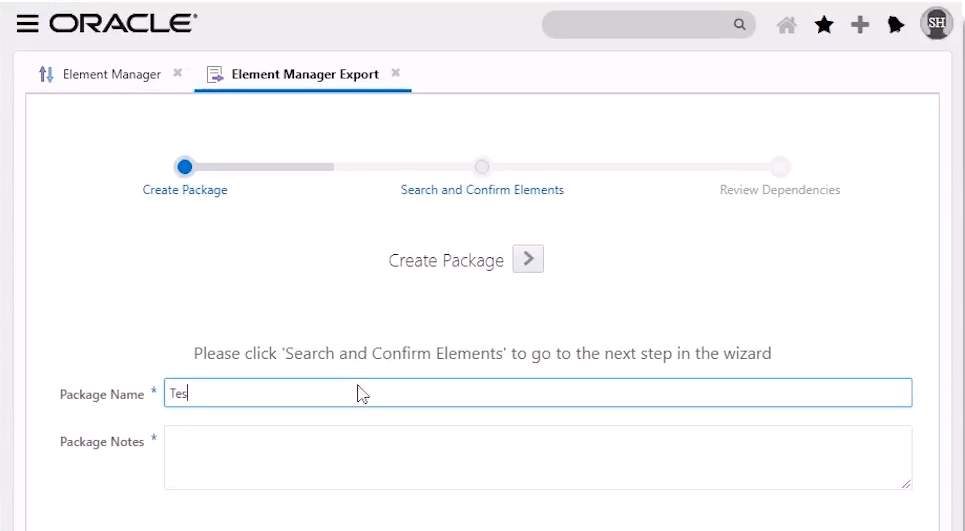
This is probably the feature that most system integrators (SIs) and admins craved for. The ability to “package up” configurations and release them to another environment, in an automated fashion.

It is particularly useful when deploying changes from DEV to TEST or from TEST to LIVE environments. Or, when you have many interfaces (e.g. due to different languages) and need to replicate changes.

It allows packaging of configurations, customisations or developments, for migration into other OSvC interfaces or instances, managing dependencies automatically, and allowing roll-back of most recently deployment.

Important Note: The Element Manager only works from the Browser UI (BUI) and in the current release only allows the migration of reports, workspaces, workflows, and dashboards.

When fully deployed the Element Manager will not only benefit SIs but clients themselves as this feature will avoid manual replication of configurations across interfaces and instances, which significantly increases deployment time, effort and cost.

The link below includes a step-by-step demo provided by Oracle, on how the Element Manager works, and confirm how easy-to-use and user-friendly it is.

Oracle Service Cloud – Element Manager – Step-by-Step Demo

oracle_service_cloud_element_manager_1


17D Release now available (Part I)

The 17 D release of Oracle Service Cloud (OSvC) is now generally available and it brings exciting new features and enhancements to the ever more exciting Browser User Interface (BUI) – by the way if you’re confused about the release terminology, read this post “Oracle changing version terminology“.

Browser UI – Best and Proposed Answers

The new release allows agents, using the BUI, to select the answer(s) that helped them resolve the incident (from the list of all answers listed). Marked answer(s) will be given greater deference by the SmartAssistant.

Additionally, the well known Propose Answer functionality, available in the console (.NET client) is also available in the BUI now. Allowing agents to propose incident response as a new or potential answer in the knowledge base.

Browser UI – Assets, Agent Scripts, Multi-Edit, Product Linking

17D brings a whole raft of very useful functionality (previously available in the console) into the BUI. The ability to display and work Assets as well as use Agent Scripts is definitely something that many users will welcome.

Product linking is also available now, allowing those who have large numbers of products, categories and dispositions, to avoid going through long lists of menu items to find the appropriate option, simplifying the agent’s job.

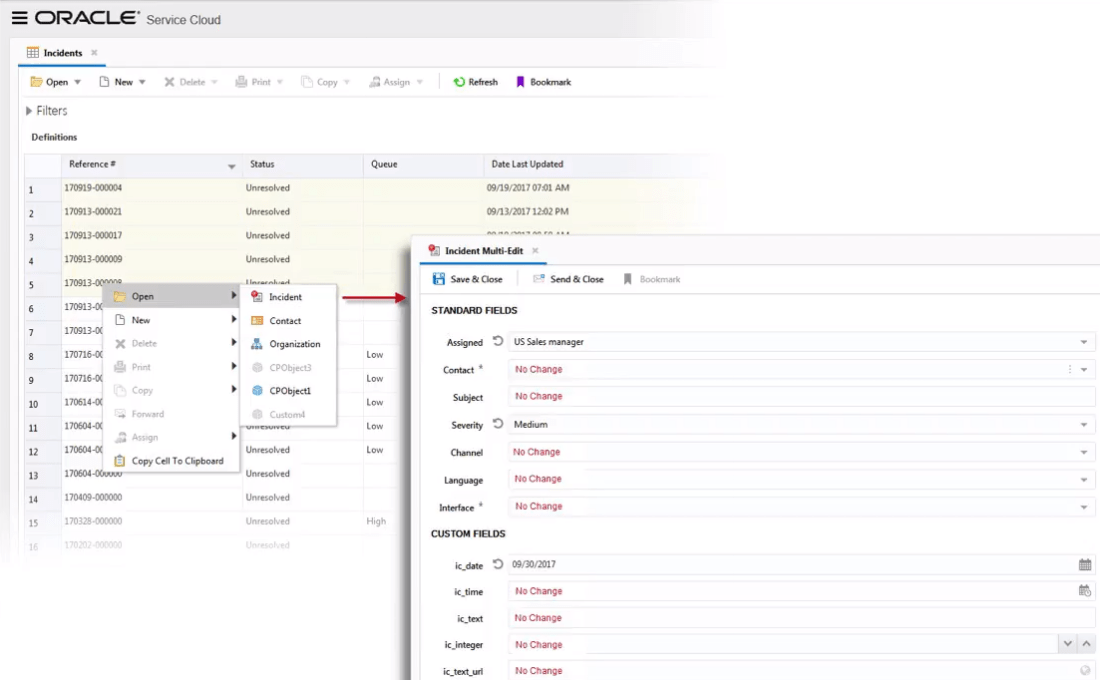
Lastly, users can now take advantage of the multi-edit workspaces capability to edit multiple records in one go – something that I’m sure most of you would have been crying for in the BUI.
Oracle_service_cloud_17d_multi-edit

Browser UI – Input Controls

Continuing to enhance the functionality in the BUI, Oracle has made available in  the 17D release the the following controls:

  • Radio button
  • Text Box
  • Menu
  • List Box

Additionally 17D release supports workspace rule triggers, conditions and actions for those input controls. With this capability the BUI now supports the ability to trigger workspace rules, apply conditions and set the value on those input controls, as well as assign a value of the Text Box control to a field.

Browser UI – Workflows (Phase 1)

Desktop Workflows are widely used by the OSvC community, but so far weren’t available in the BUI. But, the new release supports workflows for workspaces and page navigation., even though it is still at a limited capacity.

The workspace elements supported are: Decision, Set Fields (except relative date field values), Create and Workspace (except assets), and Connector elements (except Exit Guide and Exit/Finish script connectors).

More detail on the Desktop Workflow elements supported by the BUI is shared in Answer ID 9845.

Browser UI – Service Level Agreements

The new release also brings SLAs runtime support to the BUI, adding the SLA container control (Relationship items) and SLA instance view control for Organisation and Contact workspaces.

Agents can then manage customers’ SLAs (type and amount of support you offered), complementing the capability of selecting the SLA instance in the incident (which was already there).

Important Note: The SLA management and configuration page is not yet available in the BUI, thus admins will have to still use the console to create and edit SLA instances, set response requirements, initial response and incident resolution times.

Browser UI – Analytics Auto Filtering and Report Queuing

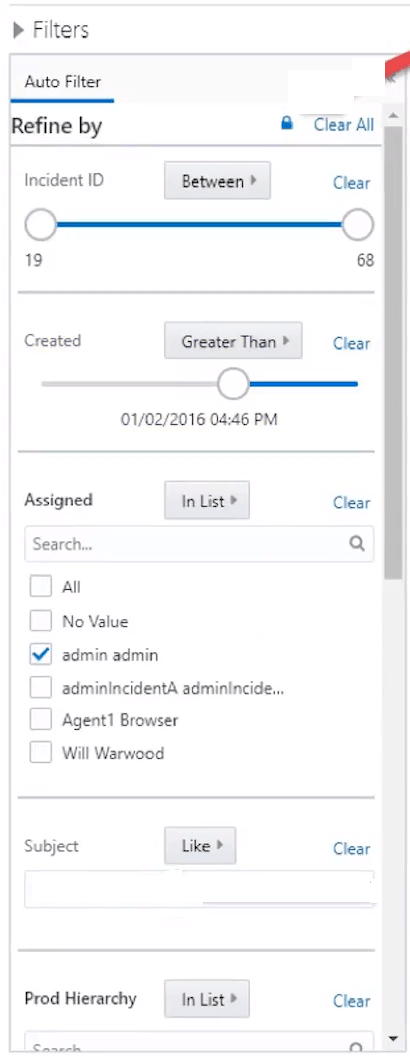
Auto-filtering is now available in the BUI, and can be turned on and off at runtime. For those not familiar with it: with a report filter only the records that match the filter values are returned from the database and displayed on the report. On the other hand, with the auto-filter records that do not match the filter values are hidden, but not removed from the report’s output.

Auto-filter values selected apply only to the report page displayed, and will be lost as soon as the report refreshes, or when agents move to another report page. Even though, it is possible to lock auto-filter values.

It is also important to know that auto-filter fields are associated with the visible columns on the report, auto-filter values will definitely be lost when agents move to a different report level or linked report. Those will then have their own auto-filter options.

The coolest thing about it is that Oracle developed the auto-filter functionality following concepts of modern web design.
Oracle_service_cloud_17d_auto_filter

Forrester Wave Q3’17: Oracle leads Digital Experience Platforms

20171118 Forrester Wave - Digital Experience Platforms Q3 2017

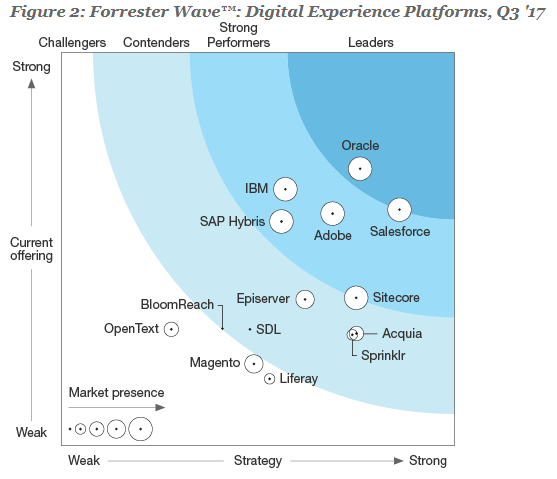
Forrester recently published their Q3 2017 Wave for “Digital Experience Platforms“. Having research and analysed the 14 most significant vendors, Oracle came out as leader – the only one.

The assessment was done against 28 criteria grouped into Current Offering, Strategy and Market Presence. No surprise that those with higher scores have complete suites with Content, Commerce, Marketing, Sales, Service, and Analytics capability.

Why does technology work for customer and not for companies?

No doubt. Customer Experience has been shaped by technology. Mostly because customers’ expectations have been rising by the way they use technology on their personal lives. In particular by the way they communicate with family and friends, using messaging apps – Facebook, Twitter, Snapchat, WhatsApp, Facebook Messenger, etc.

No doubt. Customer Experience delivered by most companies has not been up to the standards. Mostly when it comes to engaging customers on their preferred channels (you guessed it, the ones mentioned above). It’s true that customers are adopting new channels faster than companies can establish a presence on them. But that’s no excuse.

Blake Morgan, in More is More, says “Technology doesn’t just enable consumers, it enables brands to evolve their offering as well (…) leverage technology to enhance Customer Experience“. It is surprising how this may sound news to some companies, when it is so bloody obvious! If not more, because technology vendors knock on their doors every day!

The truth is there are some companies that do acquire and implement technology, to try and make their operations more efficient, enter new markets, enable new channels, or even provide a better Customer Experience. But it is also true that those efforts, more often than not, do not deliver the desired results or expected return on investment.

I’ve been a consultant in this area for more than a decade. As I see it, there are a couple of main reasons why companies keep failing in their efforts to improve with new technology implementation. On one hand, those implementations are technology-focused only. On the other hand, there is no technology strategy or governance.

I’ve wrote it once: “technology alone does not solve all the problems, nor turn around a poor performing business (…) technology is one part of the solution and should not be expected to “save the day” in isolation. Processes, culture and people are also critical, and must also be taken into account“.

And when it comes to acquiring technology, companies should have a well-defined strategy and governance, to avoid different departments buying their own technology platforms (as if they were sticking plasters for their own issues or needs), which then don’t talk to each other, and spread crucial customer data throughout multiple (and most times difficult to access) databases.

This doesn’t mean that companies need to be chained to one particular technology vendor, hoping that in its roadmap that vendor has a complete Customer Experience Platform, that serves every business area,  process, department or team, and stores every bit of information into one single (and necessarily monstrous) database.

Companies could (in my opinion, should) buy technology from different vendors. I bet you the Supply Chain Management platform that best suits your business is most likely from a different vendor than the Voice-of-the-Customer platform that better meets your Customer Experience management needs.

But that should not be a problem. As long as those platforms are flexible enough to allow alignment between technology and your business processes, as well as have pre-built connectors or public APIs that enable integrations with each other. And if you choose the right specialist partner to help you implement it.


What Is The Customer Experience Cloud?

In a fantastic article published in Forbes, Blake Morgan (Customer Experience futurist, author and keynote speaker) explains “What Is The Customer Experience Cloud?” without using acronyms or complex words and concepts.

It is crystal clear, and very useful for those business leaders who have been hearing about it and many times misguided by technology vendors. Below are a few key pieces, but I would recommend you to navigate to Forbes and read the full article.

“Essentially, the experience cloud is the infrastructure that allows brands to create useful, smooth experiences for their customers. Instead of having customer data and interactions divided over multiple systems, the experience cloud creates a single 360-degree view of the customer by building bridges among marketing, customer service, sales, and other business groups”.

“The old way of doing business with only a marketing cloud or sales cloud just isn’t enough anymore (…) Without integration, so much time was lost to inefficiency, and brands never truly had a full picture of their customers”.

“Teams within an organization were often siloed and duplicating information instead of working together, which made it difficult to deliver an amazing customer experience, especially one that was consistent across multiple channels. Instead of using function-based technologies, the experience cloud puts the customer at the center of everything the company does”.

“Today’s top brands are focused on the customer, and the experience cloud makes it easier. The goal is to create seamless conversations and interactions across the entire customer journey. Instead of a customer having a different experience each time they walk into the store, visit a website, or talk with a customer representative, the experience cloud pulls everything together to create a cohesive experience”.